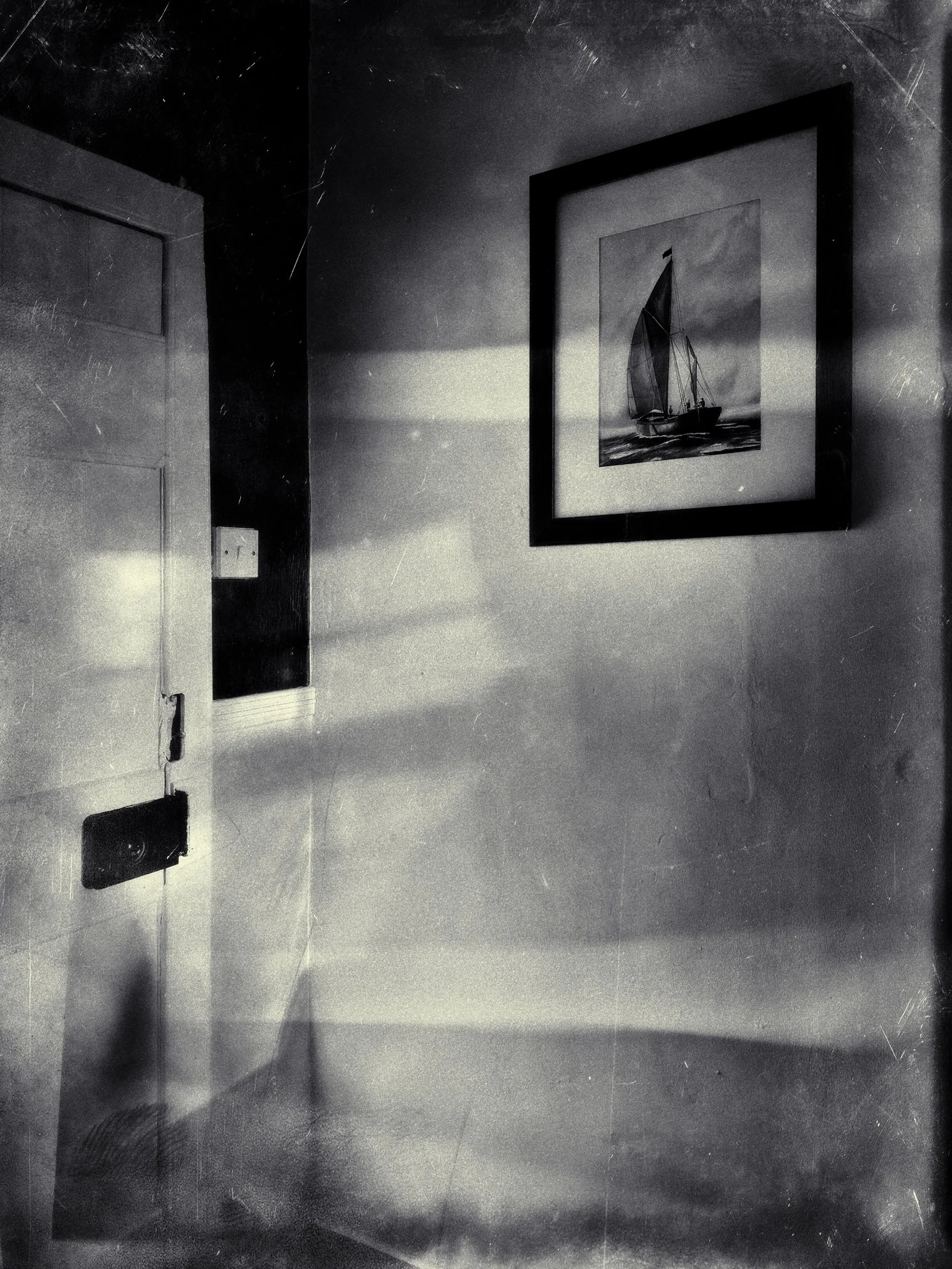
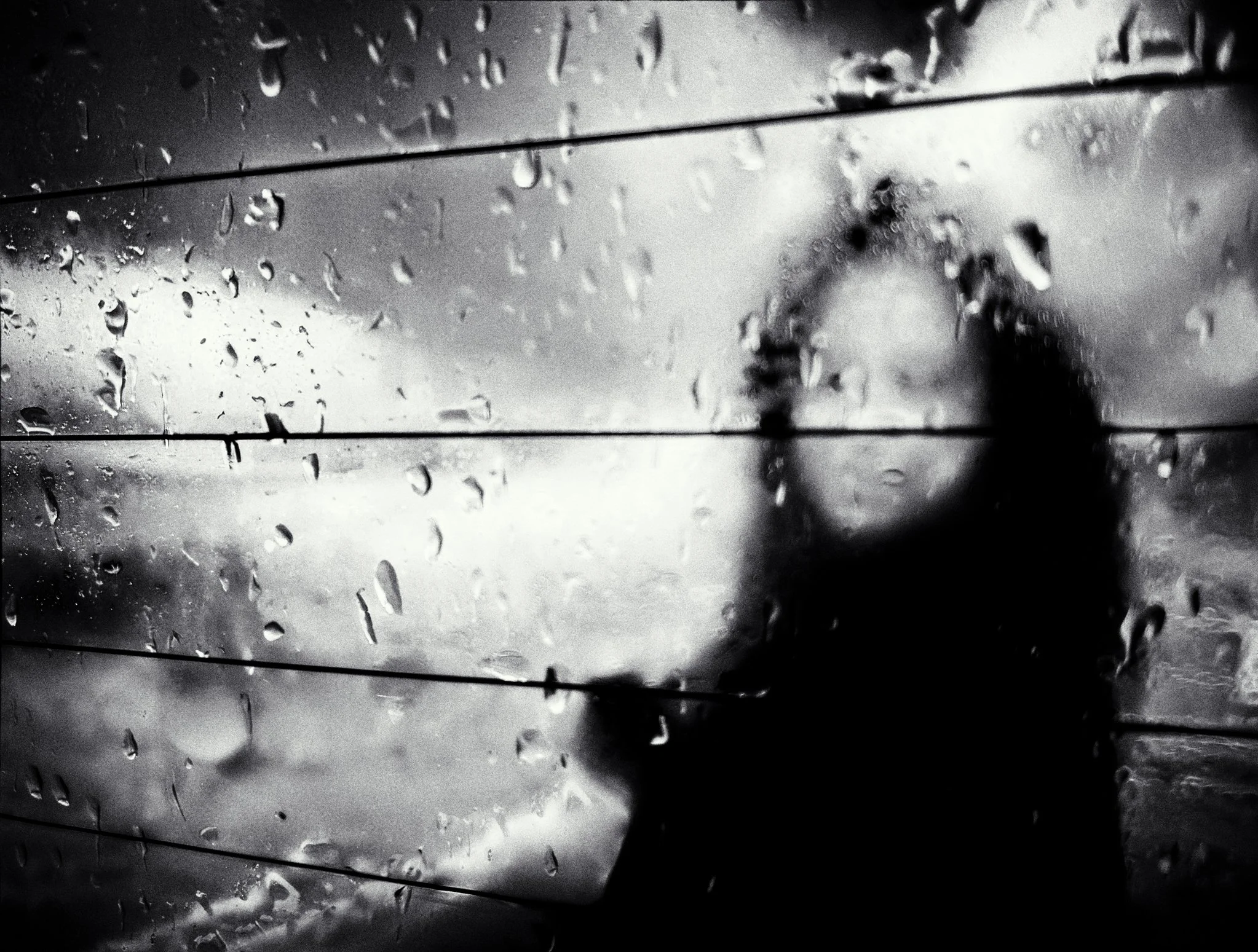
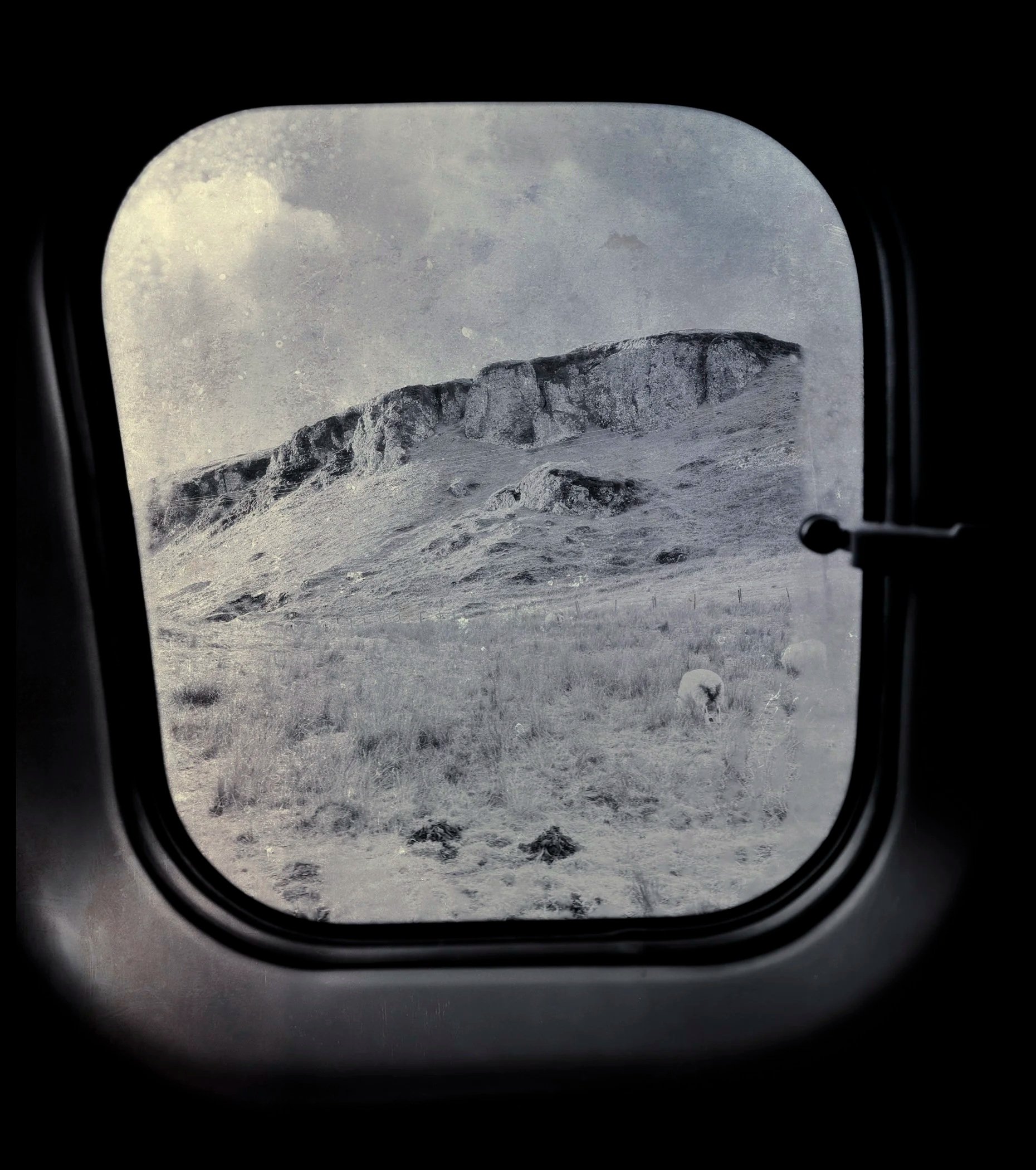
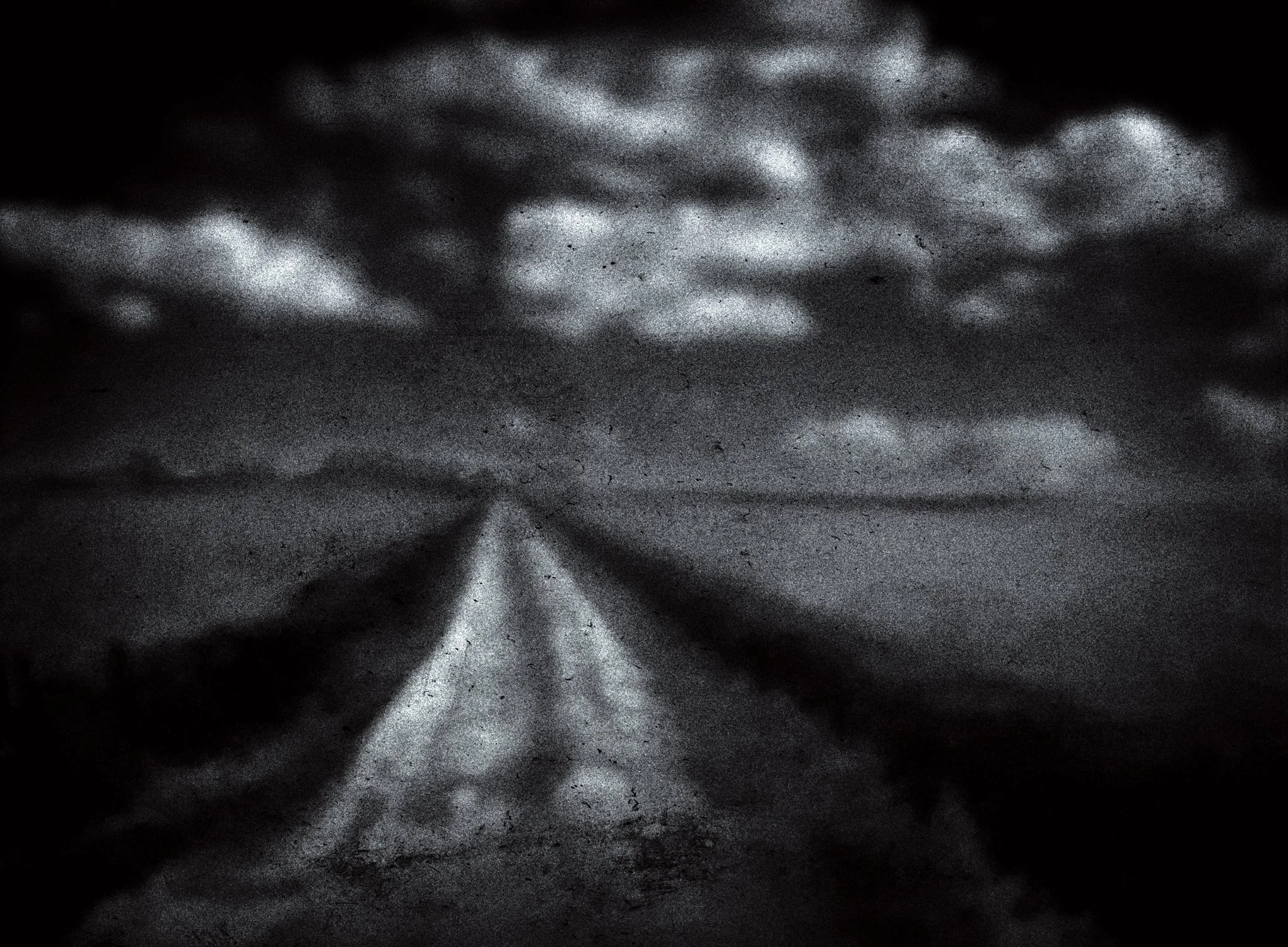
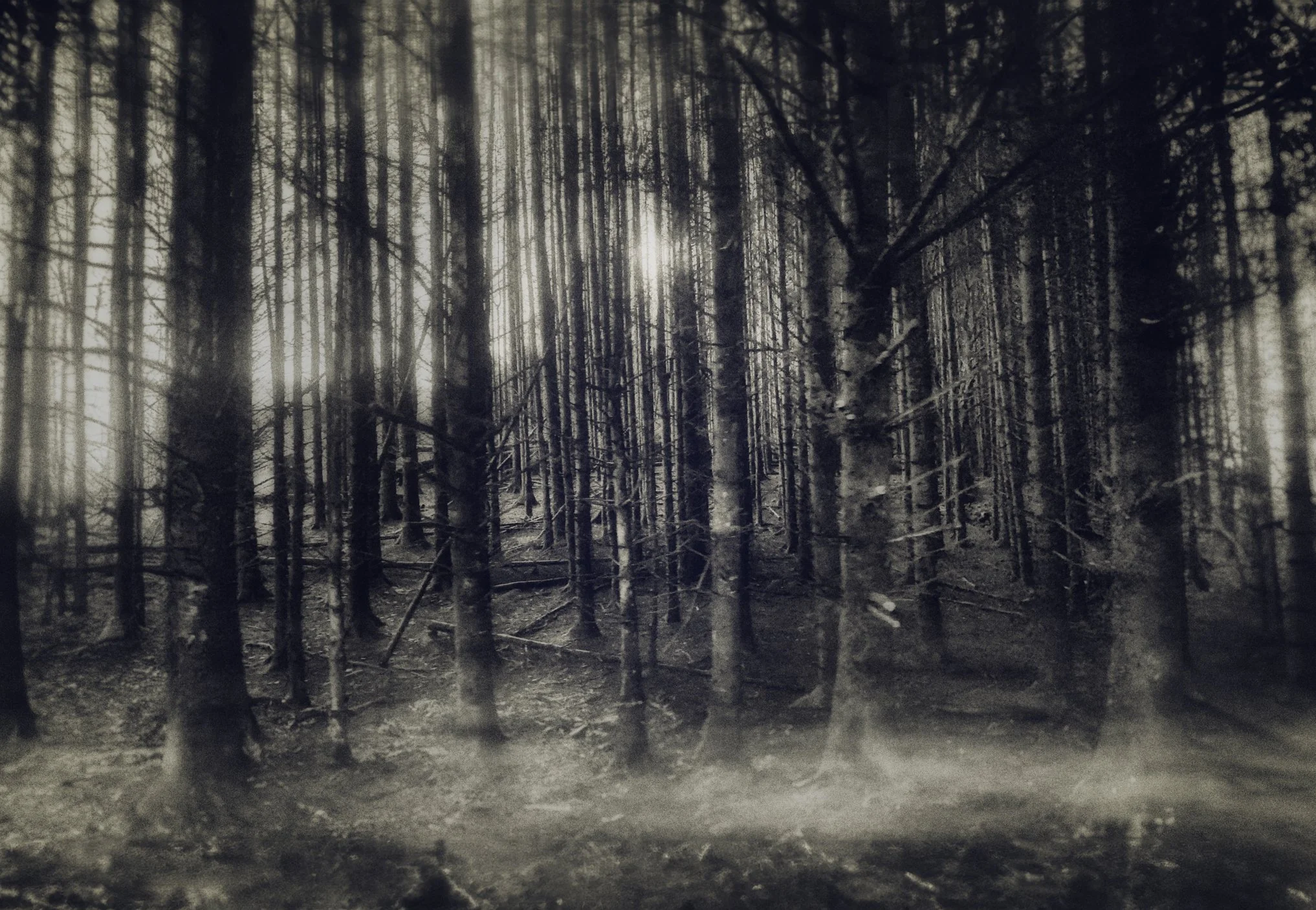
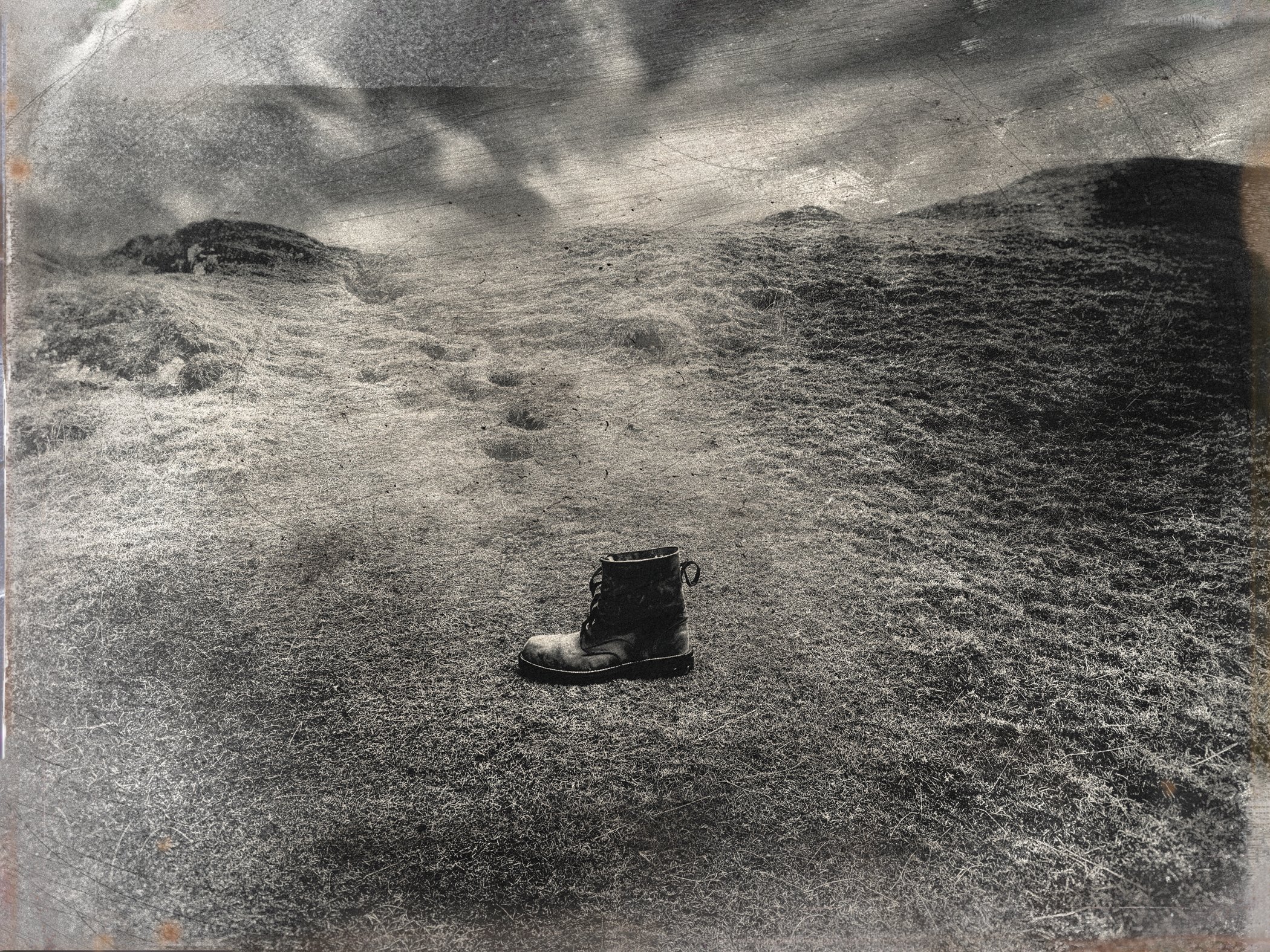
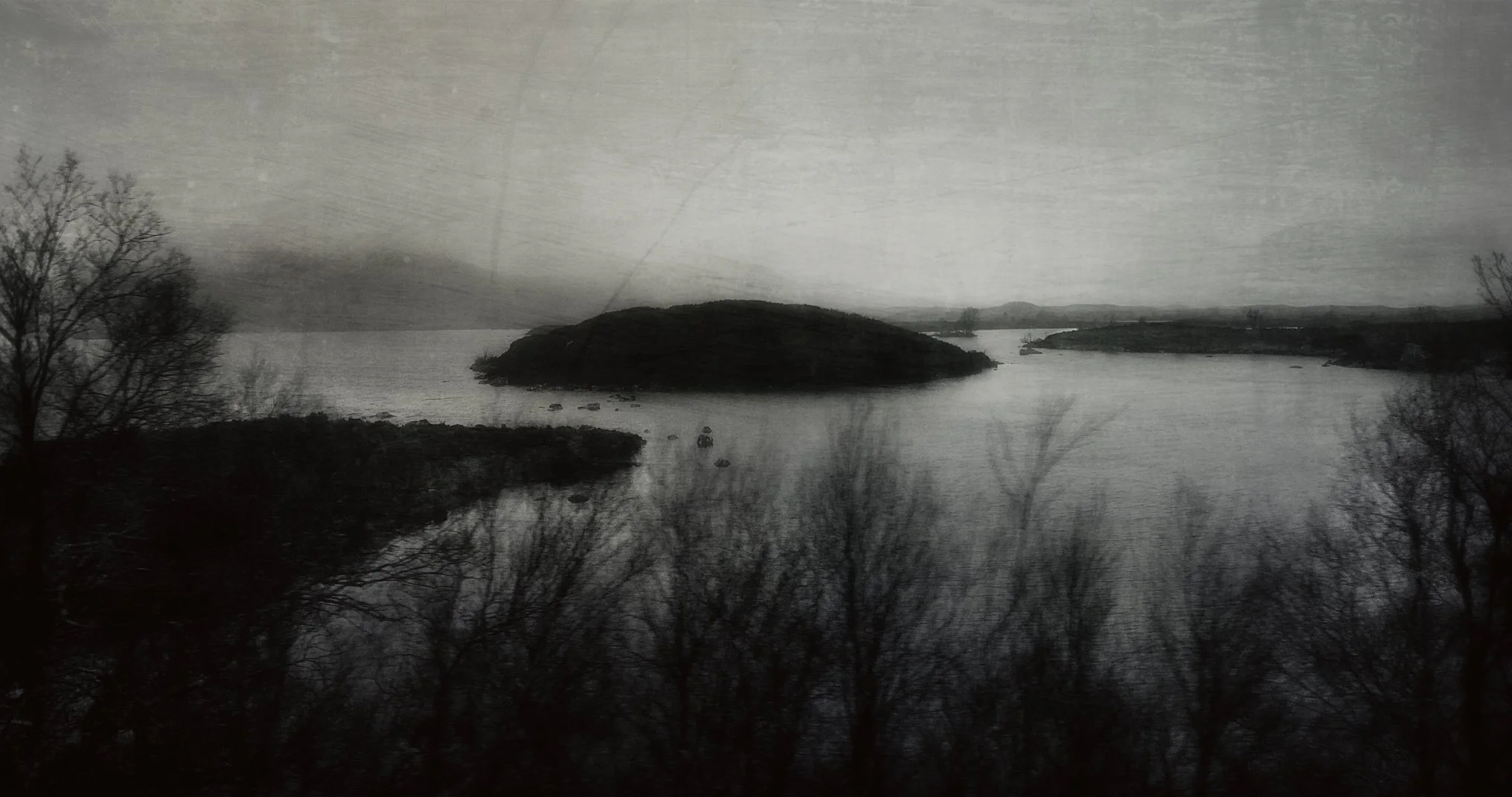
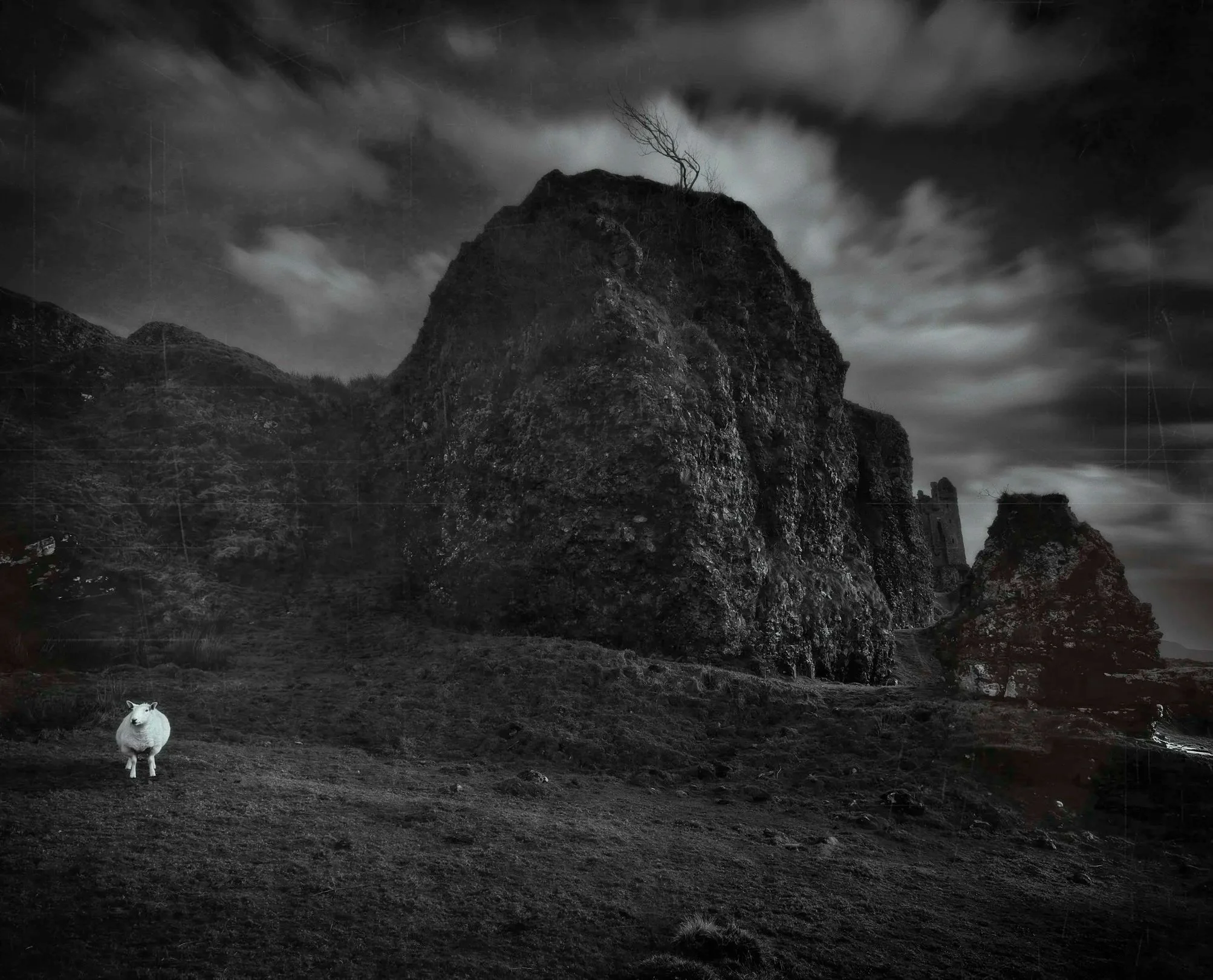
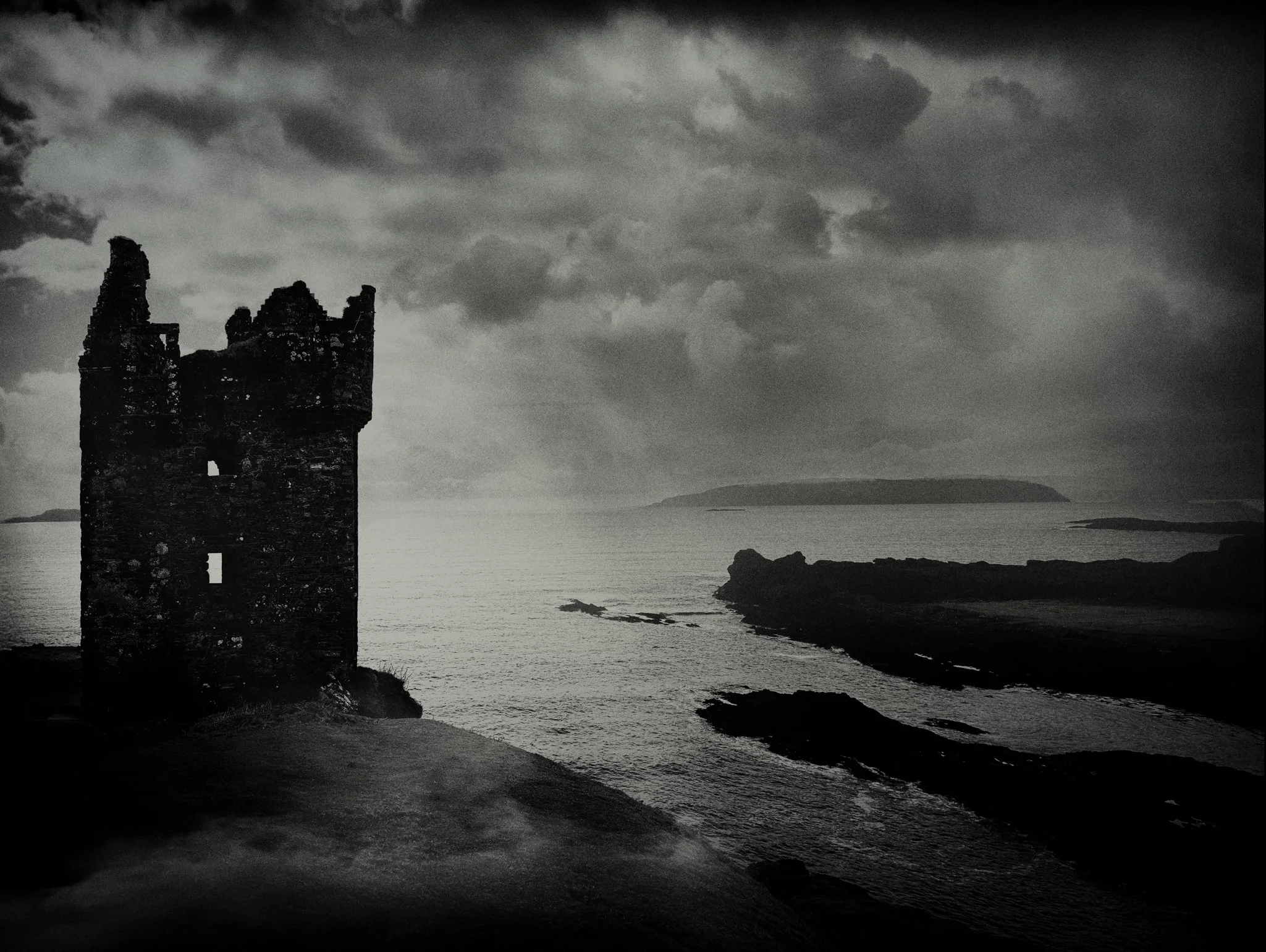
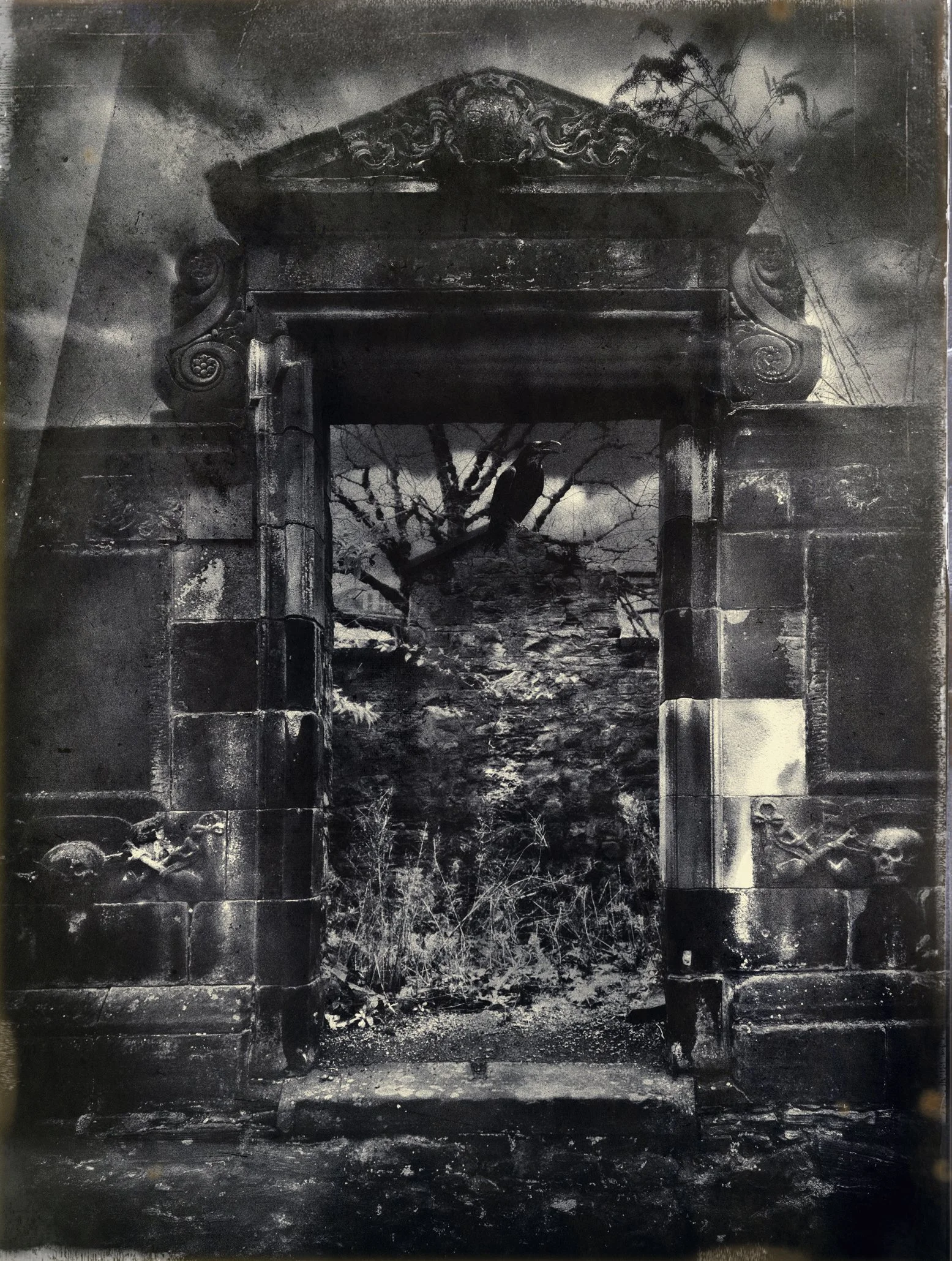
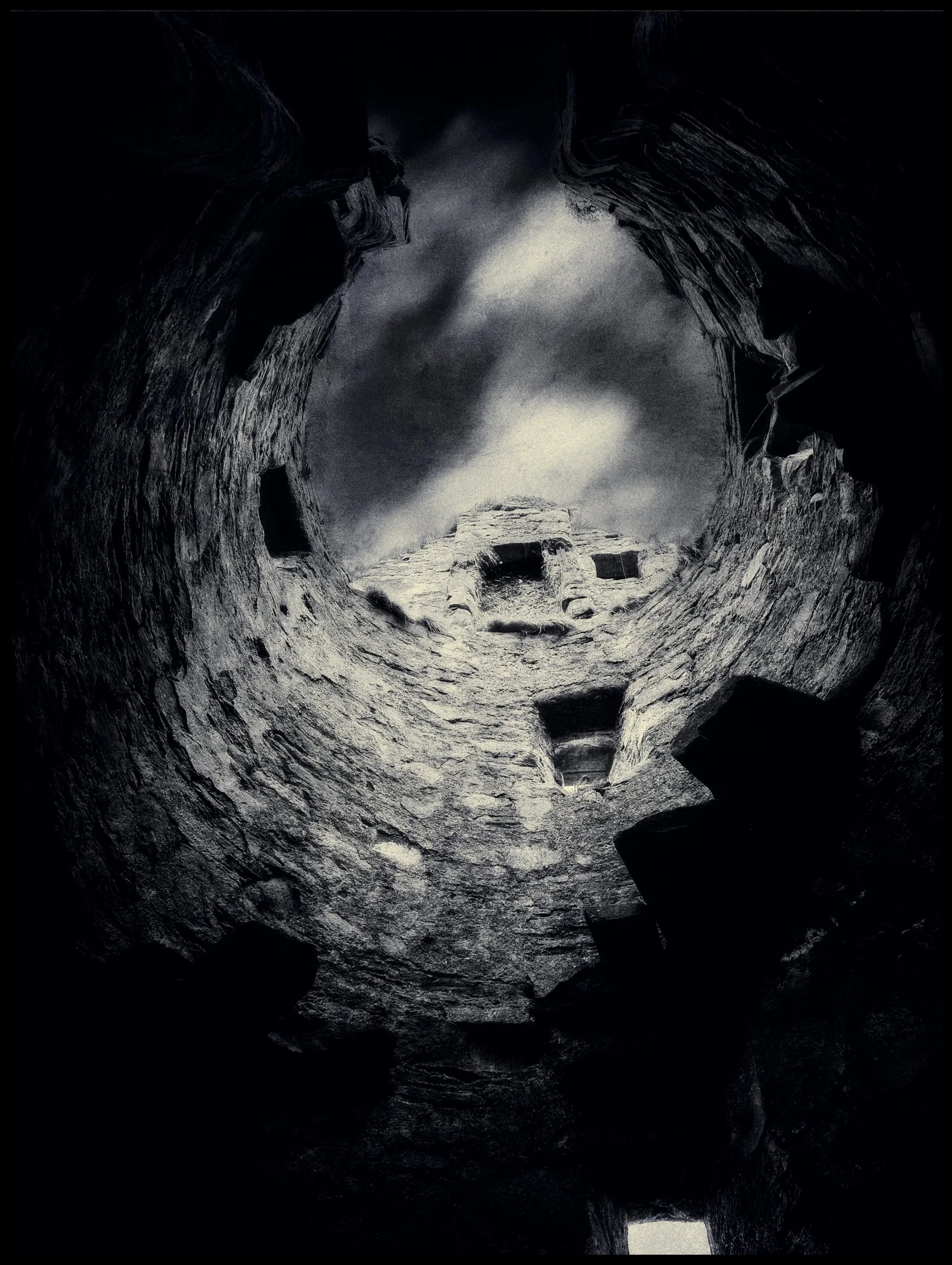
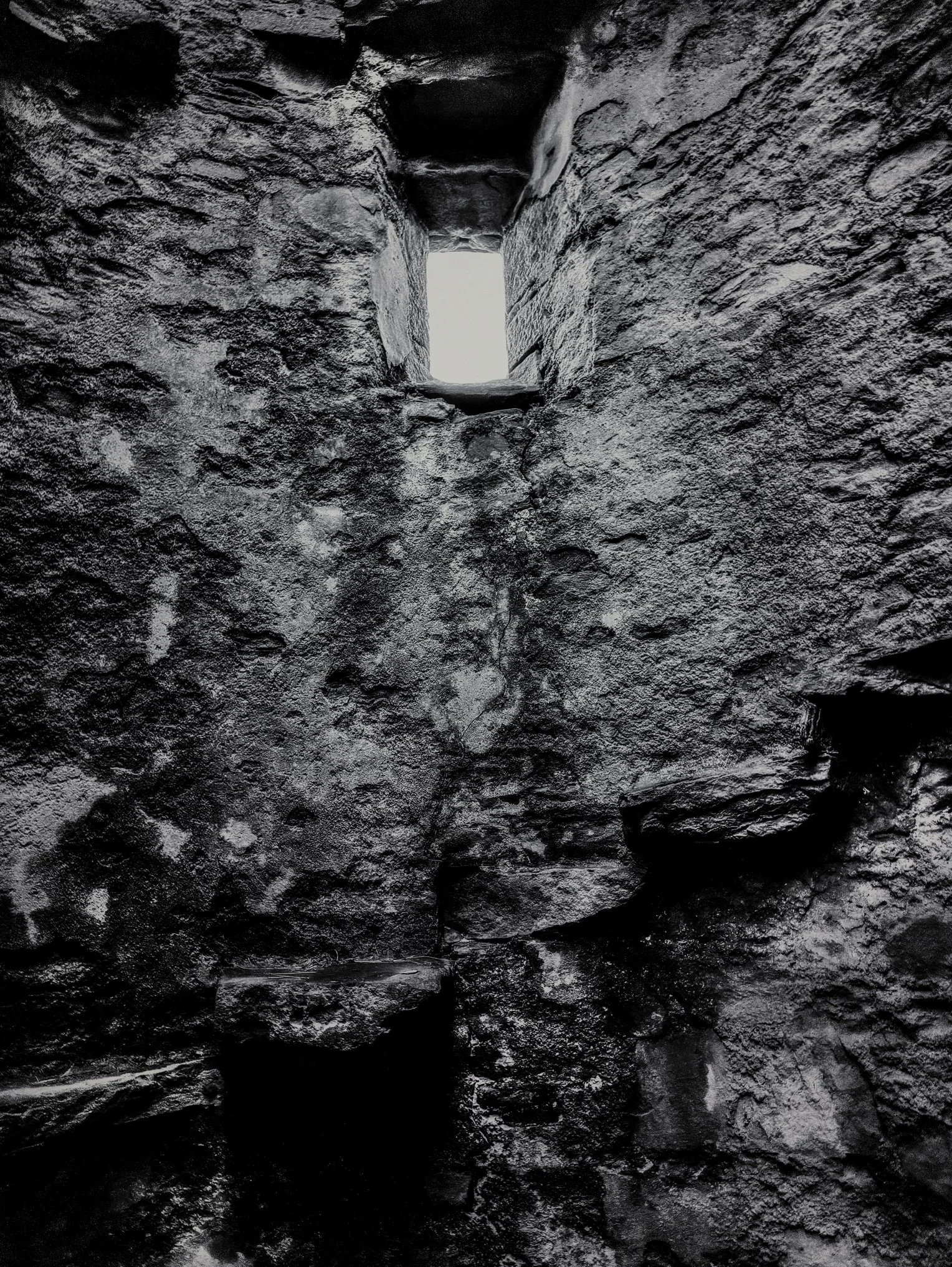
Tìr nan Òg gathers fragments of a world that feels both intimate and unreachable. The photographs construct a psychological landscape: a place where the visible world is charged by longing, dread, and reverie.
The work is less concerned with documenting place than with locating an atmosphere. Ruins become thresholds, interiors become chambers of waiting, and the landscape appears not as backdrop but as witness: ancient, indifferent, and haunted by recurrence. Across the sequence, the work moves from entry and apprehension toward enclosure and silence, asking how a place can feel inhabited by what is gone, imagined, or just beyond reach.
In Tìr nan Òg, landscape is not fixed geography but a condition of mind—one in which beauty, estrangement, and the remnants of human passage are held in suspension.